Billboard QR Codes That Finally Make Out-of-Home Measurable
Add a QR code to a billboard and finally track out-of-home response. See scans by board and location, edit the destination after the print goes up, and prove which placements work with linkutm.
Free plan available. No credit card required.
Out-of-home advertising has always been a leap of faith. You buy a billboard, hope people notice, and have no way to prove it drove anything. Once the print is up, the destination is locked, so a changed offer means a wasted board.
Scenario
“You run the same creative on three billboards across a city: a highway board, a downtown board, and one near a transit hub. The buy is expensive, and you need to know which location is worth renewing before the next flight.”
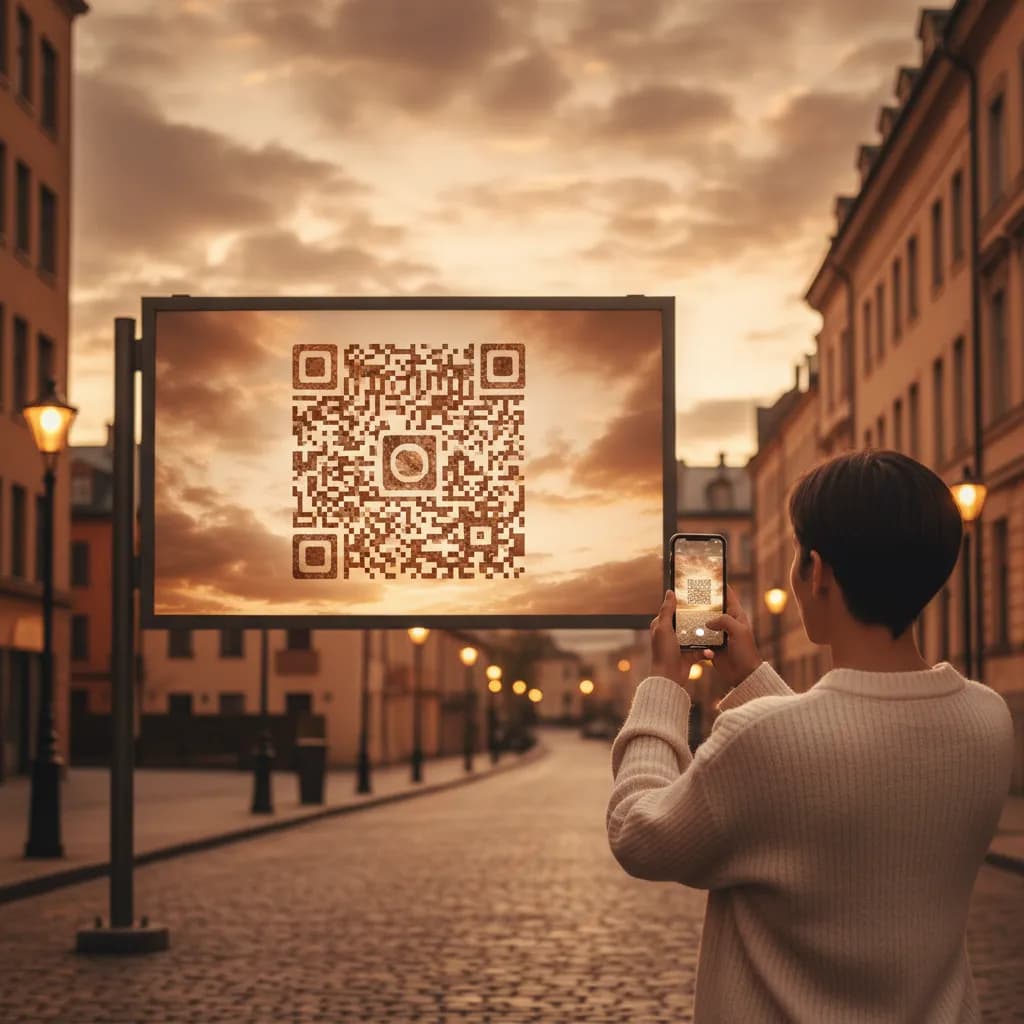
A billboard QR code gives out-of-home advertising the one thing it always lacked: proof. Every scan is a person moving from a physical board to your site, and a tracked code records which billboard and location drove them. Because the code resolves through a short link, you can change the landing page or offer after the board is already printed and mounted, protecting the spend when a campaign shifts.
How to Track Billboard QR Codes
Give Each Board Its Own Tracked Link
Create a short link per billboard in linkutm, tagged like `utm_source=highway_board`, `utm_source=downtown_board`, and `utm_medium=billboard`, with the city as `utm_campaign`.
Design the Code for Distance and Speed
Make the code large and high-contrast so it scans from a distance in a moment. Route it through a short link so the offer can change even after the board is printed.
Compare Locations and Renew the Winners
Track scans per board and location, then put your next out-of-home budget behind the placements that actually drove response.
Example: Highway vs Transit-Hub Board
A brand tags its highway and transit-hub billboards separately. The highway board is seen by more people but scans poorly, since drivers cannot safely scan. The transit-hub board, seen by waiting commuters, scans far better. The next buy shifts toward transit locations.
Highway Board
High traffic
Low scan rate
Transit Hub
Waiting audience
High scan rate
Free plan available. No credit card required.
Best Practices
Use a separate tracked link for each board and location.
Size the code for distance scanning with strong contrast and quiet space.
Favor placements where people can safely stop to scan.
Route through short links so offers can change after printing.
Give people a real reason to scan, not just a bare code.
See how QR code tracking works with linkutm
Related QR Code Use Cases
QR Codes on Clothing: Track Garment Tags and Care Labels
Add QR codes to garment tags, care labels, and packaging to share sizing, care, authenticity, and offers, and track which scans drive action. linkutm keeps every clothing QR code editable.
Read use caseQR Codes on TV: Track Response From Ads and Broadcasts
Put a QR code on a TV ad or broadcast and measure the response you could never see before. Track scans by spot and airing, and edit the destination between runs, all through linkutm.
Read use caseQR Codes for Cashless Payments: Track Every Scan-to-Pay
Accept cashless QR payments at the counter, on tables, or on invoices, and track which points of sale drive them. linkutm makes every payment QR code a trackable, editable short link.
Read use caseReady to Optimize Your Strategy?
A billboard QR code turns out-of-home from a hopeful guess into a measurable channel. You can prove which boards and locations earned response, adapt the offer after the print goes up, and renew only the placements that actually work.