Generate Free QR Codes for Audio
Sound on paper. Host the recording, encode the link, and a scan puts your voice message, podcast episode, audio guide or track into someone's headphones.
Create your audio QR code
Link to any web page
Try something like https://example.com/

This code is static and permanent. To change where it points after printing, .
Why Use This Tool
Sound on paper. Host the recording, encode the link, and a scan puts your voice message, podcast episode, audio guide or track into someone's headphones.
Puts sound on paper
A scan plays your recorded message, podcast episode, audio guide or track through the listener's own phone and headphones.
Free with no signup
Host the recording, paste the link, and generate the code in seconds. No account and nothing to install.
Styled for cards and merch
Set colors, module styles and a logo so the code suits a greeting card, a museum label, a flyer or the back of a t-shirt.
Update the recording later
Point the code at a linkutm short link and swap the audio for a new take without reprinting the card or poster.
How It Works
- 1
Host the audio where a browser can play it
An MP3 on your own server, a SoundCloud or Spotify link, a podcast episode page, or a Drive file set to public. MP3 and M4A play in every mobile browser; more exotic formats do not, and a file the browser cannot decode simply downloads instead of playing.
- 2
Keep the file small
Export speech at 96kbps mono and music at 128kbps stereo. A three-minute clip lands around 2-3MB, which starts playing almost immediately on mobile data. Uncompressed WAV files are the usual reason an audio code feels broken, they are not broken, they are just enormous.
- 3
Decide between a file and a page
A direct file link opens a bare browser player, which is fast and slightly ugly. A simple page with a title, an image and an embedded player looks far better and gives you somewhere to put a follow-up link. For gifts and greeting cards the page is worth the extra work.
- 4
Print with a headphone hint
People scan in public and are startled by sudden sound. A small line, 'Scan to listen, headphones recommended', sets the expectation and stops the immediate panic-lock that kills the play.
The uses that actually stick
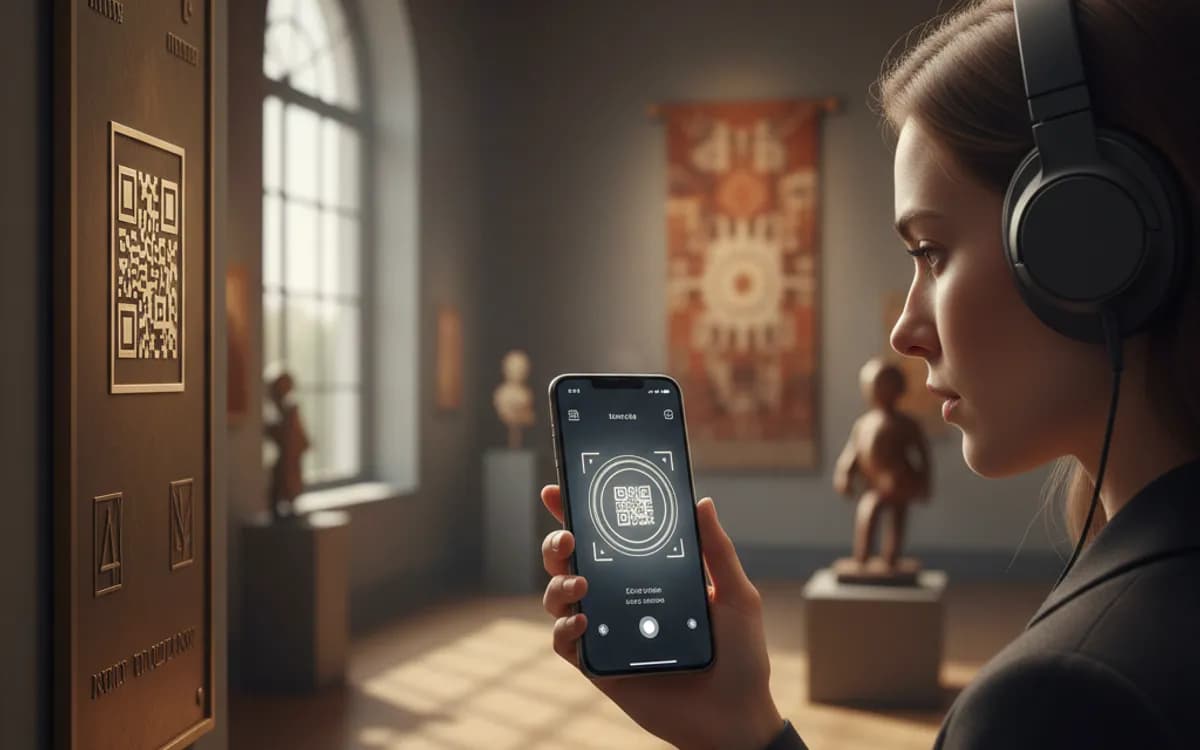
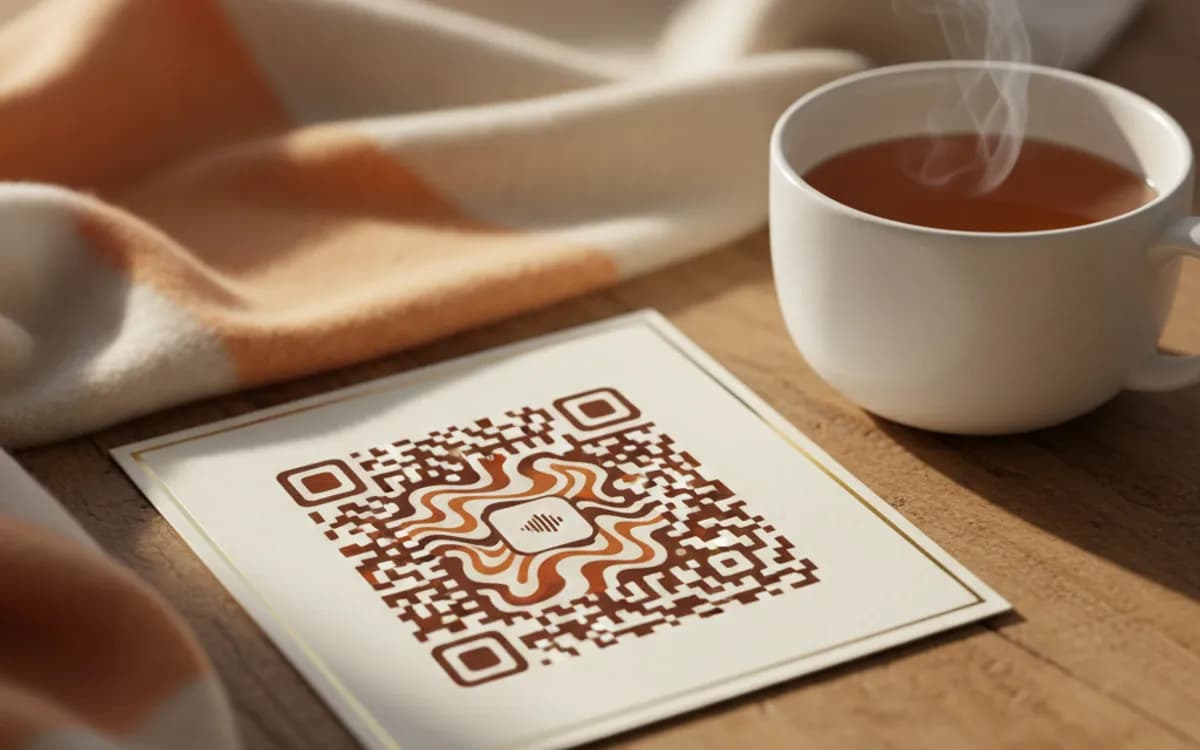
Greeting cards and gifts carrying a recorded message, which is the highest-emotion use of any QR type and the one people photograph and share. Museum and gallery audio guides, replacing rented handsets with the visitor's own phone and headphones. Language learning and pronunciation on printed worksheets. Musicians putting a track on a poster, a flyer, or the back of a t-shirt. Accessibility, where a spoken version of printed information genuinely widens who can use it.
Accessibility deserves its own consideration
An audio code next to printed text is a real accessibility win for people with low vision or reading difficulties, but only if it is discoverable and labelled. Put it in a consistent position across your materials, describe it in plain words, and keep the recording to the same content as the print rather than a marketing rewrite. If the audio is the only way to get essential information, provide a text alternative too.
Rights matter more here than anywhere else
Music is the most aggressively enforced category of content there is. If you did not create the recording and do not hold a licence covering the use, do not put it behind a code on something you print and distribute, a QR code is a distribution mechanism, and takedowns follow it just as readily as they follow a website.
Free Tool vs a Free linkutm Plan
Every code on this page is free to make and never expires. A free linkutm plan adds what a printed code cannot do on its own, editing the destination and counting the scans, with no credit card required.
Editable codes, scan tracking, and analytics are included on the free plan. Your own domain, logo, frames, and team seats come with a paid plan when you need them.
Free plan available. No credit card required.
Frequently Asked Questions
Want To Know Who Scanned It?
A dynamic QR code keeps the same printed pattern while you change where it points, and shows you every scan, when, where, and on what device.
Related Tools
Generate Free QR Codes for Videos
Make a free video QR code that plays your video on scan. No signup. Perfect for packaging, ads and manuals. Download PNG, SVG or PDF.
Generate Free QR Codes for Spotify
Create a free Spotify QR code that opens your track, album or playlist on scan. No signup. Perfect for posters and merch. Download PNG, SVG or PDF.
Generate Free QR Codes for Images
Create a free image QR code that opens your photo or gallery on scan. No signup. Great for events, products and print. Download PNG, SVG or PDF.
Generate Free QR Codes for Weddings
Create a free wedding QR code so guests share and view photos with one scan. No signup. Perfect for invites and signs. Download PNG, SVG or PDF.